Four things the chain actually shows
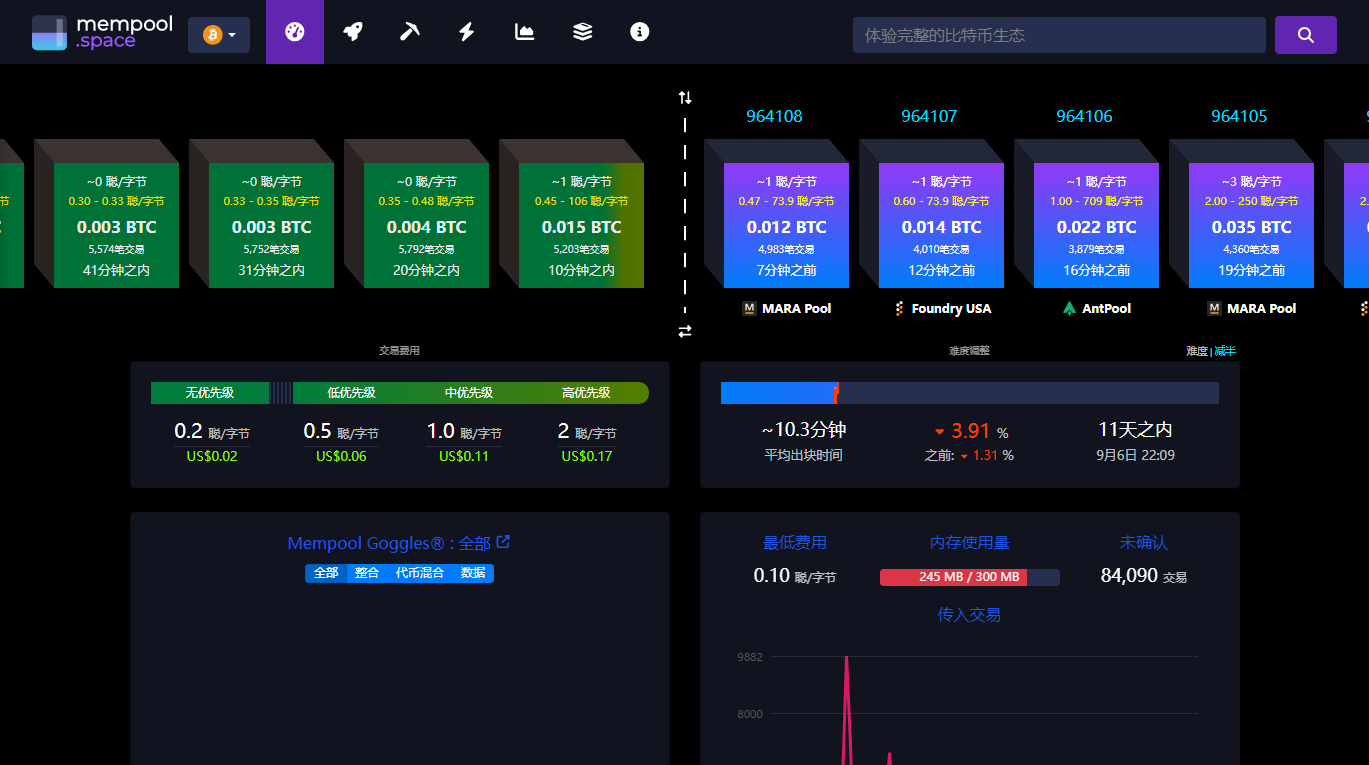
A public blockchain's ledger is open and anyone can read it. What's visible is specific, and limited:
- Addresses — a string of characters. Not an identity; a pseudonymous label.
- Amounts — how much this transaction moved.
- Time — which block included it, and therefore roughly when.
- Fees — what was paid to miners, which hints at how urgent the sender was.
Four things it doesn't show
These four are exactly what every whale-dumping narrative depends on and cannot verify:
1. Identity
Address labels (“exchange hot wallet”, “whale”) come from heuristic clustering by third-party data firms — inferring which addresses belong to the same entity from transaction patterns and co-spending. That's inference. It has an error rate, and there is no authoritative registry to check it against.
2. Intent
A large transfer into an exchange might be: preparation to sell, internal wallet consolidation, a change of custodian, collateral for a loan, a market maker moving inventory, or the settlement leg of an OTC trade. On-chain, all of those look identical.
3. What happened next
Once coins are inside an exchange, whether they were sold, when and at what price all happen on that exchange's internal ledger, which is entirely invisible on-chain. You can only see that they went in.
4. Net position
One entity may hold and move assets across many addresses and several platforms simultaneously. Seeing one address send does not mean that entity's total holdings fell.
“10,000 BTC moved from address A to exchange B” — that is a fact. “Therefore selling pressure is coming” — that is a guess resting on four unknowns. Writing both in the same sentence is the standard trick of this genre.
How large capital actually exerts influence
Rejecting the dumping narrative isn't rejecting the influence of size. It exists — the path just isn't the one people picture.
1. Through book depth, not through transfers
Price changes happen at the matching engine: a large market sell eats through bids level by level, and punching through several levels moves the price several percent. What matters is not “how much do they hold” but “how are they selling, and how thick was the book at the time”. The same total, worked over days in limit orders versus dumped at the thinnest hour of the weekend, can differ in impact by an order of magnitude. You can measure exactly this against a live book with the depth and impact estimator.
2. Genuinely large trades usually avoid the public book
Very large transactions typically go through over-the-counter desks: the two sides negotiate privately and settle in one go, never touching the public order book and therefore producing almost no immediate price impact. Which is why “a big holder selling must crash the price” fails as an inference — anyone genuinely trying to sell size is the person who least wants the price to fall.
3. By triggering leverage chains, not by size alone
A medium-sized sell with terrible timing — landing right where liquidation levels cluster — can produce a decline far larger than its own weight. The amplifier isn't them; it's leverage. See how liquidation cascades amplify moves.
What's wrong with the “manipulation” story
Its appeal is that it closes the causal loop: down means they're shaking out weak hands, up means they're marking it up. Which is also its problem — it's true under every outcome and therefore unfalsifiable.
Three more specific objections:
- At bitcoin's scale, no participant can unilaterally set direction. Daily turnover makes sustained manipulation extremely expensive and leaves extensive traces both on-chain and in the book.
- “It was a shakeout” is always said afterwards. Nobody says it during the decline; it appears after the recovery. Textbook retrofitted narrative.
- But on small, illiquid tokens the situation is completely different. Thin books and concentrated supply genuinely can be moved by a small number of participants. Transplanting “bitcoin is hard to manipulate” onto every token is the same error in the opposite direction.
Using on-chain data sensibly
-
Treat it as a trend indicator, not an event signal
A single large transfer carries close to zero information. The multi-week trend in total exchange balances is worth something, because it corresponds to changes in supply that could be sold immediately.
-
Always keep an “unknown” column
When you see a label, remember it's an inference. When you see a transfer into an exchange, remember what follows is invisible. Write those two caveats into your conclusion and the quality of your reasoning improves immediately.
-
Cross-check the timestamps
When a decline is attributed to a particular transfer, check the order of events. If the bulk of the price move happened before the transfer, the attribution does not hold.
Where address labels come from, and why they're wrong sometimes
“Whale address”, “exchange hot wallet” — these read like facts and are in fact the output of inference. Knowing how they're produced tells you how much weight they deserve.
The standard method is heuristic clustering: if several addresses are spent together in one transaction, they can usually be inferred to be controlled by the same entity; combine that with transfer patterns, timing regularities and interactions with known addresses, group the addresses into clusters, and label the clusters.
It works most of the time, and it has three well-defined failure modes:
- The co-spend assumption breaks. Multi-party signed transactions and mixing-type transactions pull unrelated addresses into the same cluster.
- Custodial attribution is inherently blurry. An exchange wallet holds countless users' assets; labelling it “exchange” is correct, but inferring “the exchange is selling” is not — the movement may be one user's withdrawal.
- Labels go stale. After addresses change hands, businesses restructure or wallets are reorganised, old labels don't update themselves.
The conclusion isn't that on-chain data is useless. It's that a label is an inference with an error rate, not a verified identity. Treating the inference as fact is the most common first mistake in this genre of analysis.
If you're going to read the chain, read this instead
Rather than chasing individual transfers, look at these two aggregate readings. They correspond to real supply-side change rather than to anyone's intent:
| Reading | What it can tell you | What it cannot |
|---|---|---|
| Multi-week trend in total exchange balances | Whether immediately sellable supply is growing or shrinking overall | The meaning of any single day's change, or whether those coins will be sold at all |
| Share of supply dormant for long periods | How much of the supply sits effectively out of circulation | Those holders' intentions, or when they might change behaviour |
What both have in common: they are statistics that don't depend on inferring any particular address's identity, which makes them far more robust than “a whale moved X”. The cost is that they move slowly and won't give you the instant explanation you wanted today — which is itself the point: the demand for an instant explanation is where a great many misreadings begin.
Common questions
Are whale-watching alerts useful at all?
As a notification that a large transfer just occurred, they're accurate. As a judgement about what price will do, they have no basis. Use them as an index, not as a conclusion.
How do I find out who owns an address?
Usually you don't. Exchanges sometimes publish some of their own addresses; everything else is third-party clustering inference with an error rate. Don't treat a label as a verified identity.
Does this apply to small-cap tokens too?
The visibility limits are identical, but the influence judgement inverts: for thin, concentrated tokens a single participant's behaviour matters far more than it does for bitcoin. There, the things worth watching are holder concentration and unlock schedules rather than any individual transfer.